

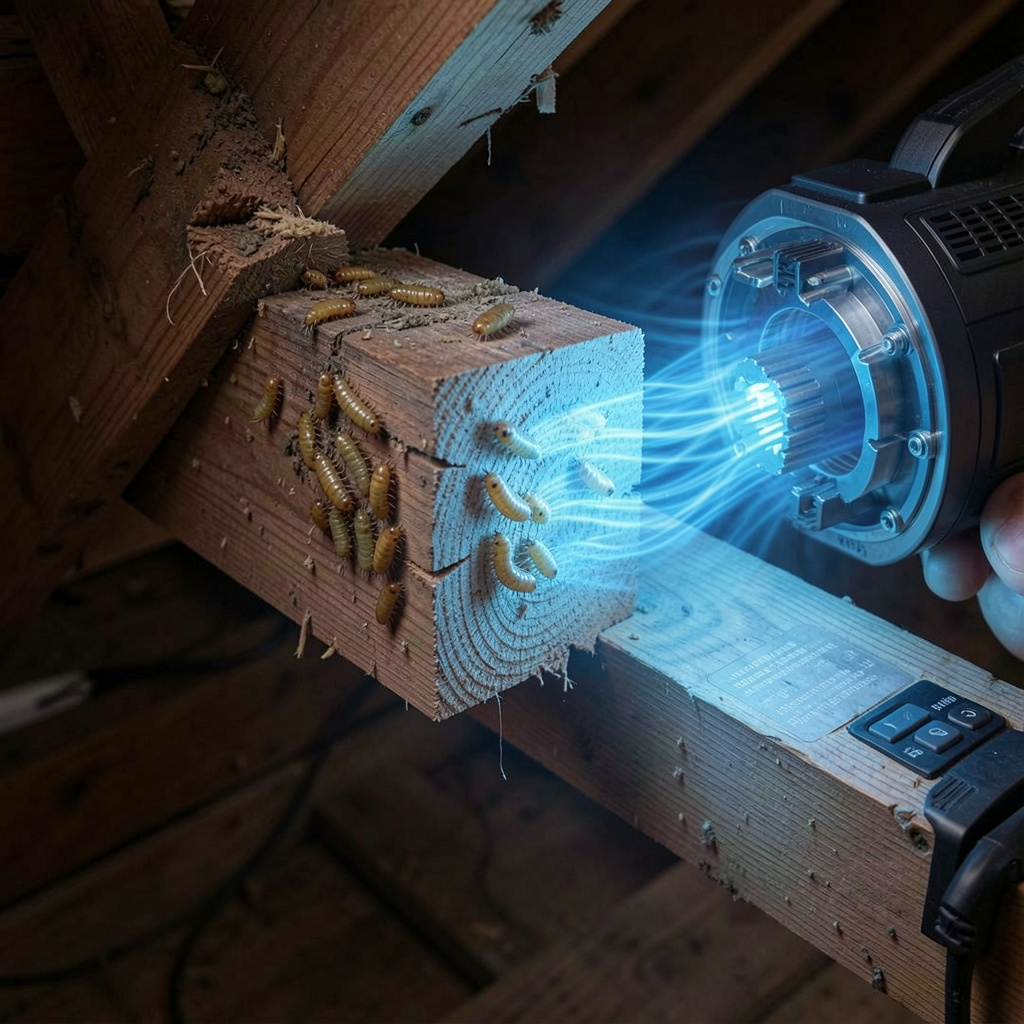
Woodworm infestations can be alarming for homeowners, especially when they affect structural beams, floor joists, roof timbers, or valuable wooden furniture. Traditionally, severe infestations often led people to believe that damaged timber had to be removed and replaced entirely. However, advancements in pest control technology have introduced a more targeted solution: microwave woodworm treatment.
Unlike some conventional approaches that may require extensive dismantling or timber replacement, microwave treatment is designed to eliminate wood-boring insects while the timber remains in place. By using controlled microwave energy to generate heat inside the wood, professionals can target the infestation directly without removing otherwise sound timber.
In this guide, we’ll explain why microwave treatment usually requires no wood removal, how the process works, its advantages, and the situations where repairs or replacement may still be necessary.
What Is Microwave Woodworm Treatment?
Microwave woodworm treatment is a chemical-free pest control method that uses controlled electromagnetic energy to eliminate insects living inside timber.
Professional equipment directs microwave energy into the affected wood, where it interacts with naturally occurring water molecules. This process, known as dielectric heating, raises the internal temperature of the timber until it reaches levels that are lethal to:
- Woodworm larvae
- Beetle eggs
- Pupae
- Adult wood-boring beetles
Unlike chemical treatments, microwave technology relies on heat rather than insecticides.
Why Traditional Treatments Sometimes Involved Wood Removal
In the past, timber was often removed for reasons such as:
- Severe structural damage
- Extensive fungal decay
- Advanced woodworm infestation
- Safety concerns
- Building renovations
It’s important to distinguish between removing insects and repairing damaged timber. Even after pests have been eliminated, wood that has lost significant structural strength may still need repair or replacement.
How Microwave Treatment Works Without Removing Timber
One of the greatest advantages of microwave treatment is that it works directly on the timber in its existing location.
The process involves:
- Inspecting the affected area.
- Positioning specialist microwave equipment against the timber.
- Generating controlled heat inside the wood.
- Eliminating wood-boring insects within the treated section.
- Reassessing the timber after treatment.
Because the heat is generated inside the timber, there is usually no need to remove sound wood simply to access the insects.
Internal Heating Reaches Hidden Larvae
Woodworm larvae spend most of their lives tunneling beneath the surface of timber.
Traditional surface treatments primarily act from the outside inward, whereas microwave technology creates heat inside the wood itself through dielectric heating.
This allows professionals to target insects hidden deep within the timber while leaving the beam, joist, or furniture in place.
Preserving Original Timber
Retaining original timber offers several important advantages.
Maintains Structural Integrity
If the wood remains structurally sound after the infestation is eliminated, keeping it in place avoids unnecessary replacement.
Protects Historic Buildings
Many heritage properties contain original beams that are centuries old.
Preserving these materials is often a key conservation objective.
Saves Time
Removing structural timber can require extensive construction work.
Microwave treatment often reduces the need for this type of disruption.
Reduces Waste
Keeping serviceable timber in place minimizes demolition waste and supports more sustainable building maintenance.
Common Structures Treated Without Removal
Microwave treatment is commonly used on:
- Roof beams
- Floor joists
- Ceiling timbers
- Timber framing
- Staircases
- Doors
- Window frames
- Antique furniture
- Built-in wooden features
In many cases, these items can be treated without dismantling or replacing them.
When Wood Removal May Still Be Necessary
Although microwave treatment eliminates insects, it does not repair timber that has already suffered significant structural damage.
Replacement or reinforcement may still be recommended if:
- The timber has lost structural strength.
- Extensive fungal decay is present.
- Rot has weakened the wood.
- Safety is compromised.
- Building regulations require repair.
The decision depends on the condition of the timber—not on the microwave treatment itself.
Microwave Treatment vs. Timber Replacement
| Feature | Microwave Treatment | Timber Removal & Replacement |
|---|---|---|
| Eliminates Active Woodworm | Yes | Yes (by replacing infested timber) |
| Preserves Original Wood | Yes | No |
| Requires Major Construction | Usually No | Often Yes |
| Creates Demolition Waste | Minimal | Higher |
| Suitable for Heritage Buildings | Often | Only when replacement is unavoidable |
Whenever structurally sound timber can be safely preserved, microwave treatment may help avoid unnecessary replacement.
Benefits of Avoiding Wood Removal
Lower Disruption
There is often less disturbance to the property compared with major structural repairs.
Preserves Historic Character
Original timber contributes to the authenticity and value of heritage buildings.
Environmentally Friendly
Retaining existing wood reduces construction waste and demand for replacement timber.
Faster Completion
Localized treatment can often be completed more quickly than removing and rebuilding timber structures.
Is Microwave Treatment Suitable for Every Infestation?
Not always.
The suitability of microwave treatment depends on factors such as:
- Extent of infestation
- Timber accessibility
- Structural condition
- Moisture content
- Presence of decay
A professional inspection is essential before deciding on the most appropriate treatment.
Preventing Future Woodworm Problems
After successful treatment, homeowners should protect timber by:
- Repairing roof leaks promptly.
- Improving ventilation.
- Reducing indoor humidity.
- Keeping structural timber dry.
- Inspecting roof spaces annually.
- Monitoring furniture for fresh frass and exit holes.
- Addressing damp conditions quickly.
Good maintenance helps reduce the risk of future infestations.
Common Myths About Microwave Treatment
Myth 1: All Infested Wood Must Be Removed
Fact: Many woodworm infestations can be treated successfully without removing structurally sound timber.
Myth 2: Microwave Treatment Repairs Damaged Wood
Fact: Microwave treatment eliminates insects but does not restore timber already weakened by woodworm or decay.
Myth 3: Heritage Beams Always Need Replacing
Fact: Conservation professionals generally aim to preserve original timber whenever it remains structurally sound and safe to retain.
When Should You Contact a Professional?
Professional advice is recommended if:
- Fresh frass continues appearing.
- New exit holes develop.
- Structural beams show signs of weakening.
- Valuable antique furniture is affected.
- You want to avoid unnecessary timber replacement.
- You’re considering microwave treatment.
A qualified timber preservation specialist can inspect the property, determine whether the timber remains structurally sound, and recommend the most appropriate treatment plan.
Conclusion
Microwave woodworm treatment offers a modern, chemical-free solution that often eliminates the need to remove otherwise sound timber. By generating controlled heat inside the wood, professional equipment targets wood-boring insects where they live, allowing roof beams, floor joists, furniture, and other wooden structures to remain in place during treatment. This helps preserve original materials, reduce construction waste, and minimize disruption to the property.
However, it’s important to remember that microwave treatment removes the cause of the problem—the insects—but it does not reverse structural damage already caused by years of infestation or decay. A professional inspection is essential to determine whether the timber can be safely retained or whether repairs are required. Combined with regular inspections, moisture control, and proper maintenance, microwave treatment provides an effective and environmentally friendly way to protect valuable timber without unnecessary removal.Visit online https://www.shashel.eu for more details .